


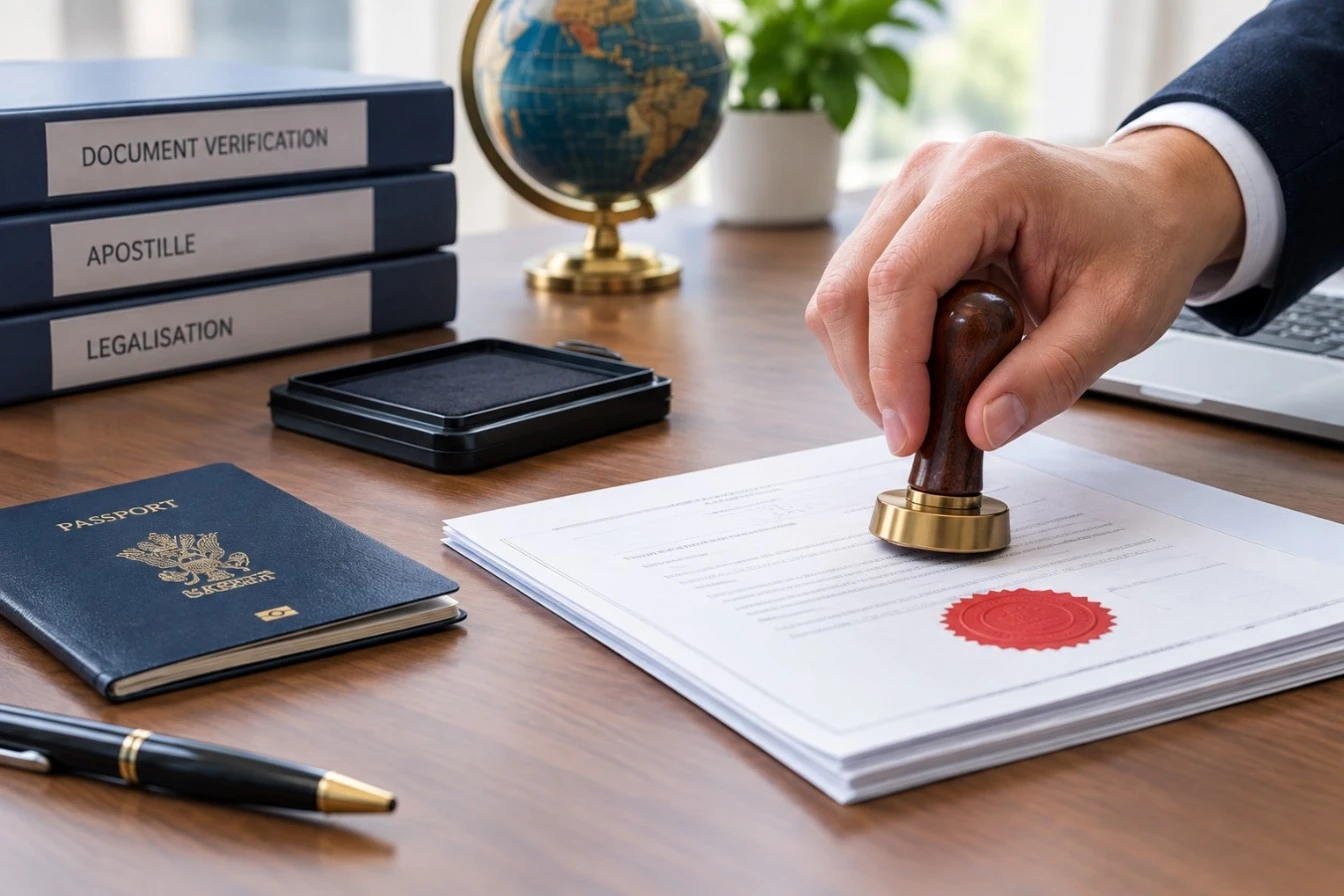
MEA Apostille for Overseas Work Documents: What Employers Need to Know
Managing employee documentation for an overseas assignment can be challenging, especially when destination-country authorities require authenticated Indian documents as part of a work permit or employment process. An MEA apostille for overseas work permit documents helps authenticate eligible Indian public documents for use in countries that recognise apostilles, making document preparation an important part of international employee mobility.
For HR, global mobility and legal teams, knowing which documents require apostille, when to start the process and what authentication route applies can help avoid unnecessary delays in an employee’s overseas assignment. From educational certificates and personal documents to other records requested by the receiving authority, each document must be assessed based on its type, issuing authority, destination country and intended use.
This guide explains what an MEA apostille is, which employee documents may require authentication, how the process works in India, and what employers should consider when preparing documents for overseas assignments.
What Is an MEA Apostille?
An apostille is a form of document authentication issued through India’s Ministry of External Affairs (MEA). It confirms the authenticity of the signature, seal or stamp of the authority that issued or authenticated an eligible public document. An apostille does not certify the contents of a document or independently verify an employee’s qualifications, employment history or eligibility for a work permit. India has been a member of the Hague Apostille Convention since 2005. Documents apostilled in India can generally be presented in other participating countries without traditional embassy legalisation. However, acceptance depends on the destination country, document type and intended purpose of the document. For international assignments, this distinction is important. An MEA apostille authenticates an eligible document for international use; it does not constitute approval of an employee’s immigration application.
When Should Employers Consider MEA Apostille Requirements?
For employers, document authentication is best considered during the early planning stage of an international assignment rather than immediately before an employee’s departure. An employee may have documents issued at different points in their career, by different institutions and in different locations. Some may be held by the employee, while others may need to be obtained from an issuing authority. This can make documentation planning more complex when several employees are being relocated at the same time.
When Do Overseas Work Permit Documents Need an Apostille?
There is no single apostille requirement that applies to every employee or every destination country.
The need for document authentication depends on several factors, including:
- The destination country
- Whether that country is a party to the Hague Apostille Convention
- The type of document
- How the document will be used
- The requirements of the receiving immigration, government, licensing, or other competent authority
The MEA states that apostille is used for eligible documents such as certain personal and educational documents, while normal attestation applies where apostille is not accepted. For employers, this makes a document-by-document review important rather than assuming that every record in an employee’s file needs an apostille.
Why MEA Apostille Matters for Overseas Employment?
- Supports document authentication
An MEA apostille can authenticate eligible employee documents intended for use in countries that recognise apostilles.
- Relevant to overseas employment processes
Authenticated documents may be required as part of a wider work permit, employment visa, professional registration or official onboarding process.
- Helps employers prepare documentation
Completing MEA apostille services correctly can help HR and global mobility teams ensure supporting documents are available when required.
- Creates a clear documentation trail
Apostilled documents can support the submission of qualifications, employment records and other relevant certificates during an international assignment.
- Requirements vary by destination
The need for an apostille depends on the destination country and the specific purpose for which the document will be used.
- Early preparation can reduce delays
Reviewing authentication requirements at the start of an overseas assignment helps employees and businesses identify which documents need to be prepared and authenticated.
MEA Apostille for Employee Documents in Pune and Across India
Companies managing overseas assignments from Pune may need to coordinate employee end-to-end immigration and documentation verification while supporting assignments across different destinations. The same applies to organisations operating from Mumbai, Bengaluru, Delhi, Hyderabad, Chennai and other Indian business centres. For employers searching for MEA apostille in Pune, the key consideration is not simply where the employee is based. The documentation requirement is connected to the document itself, its intended use and the requirements of the receiving authority. This becomes particularly relevant for organisations with employees working from different Indian locations. A consistent documentation framework can help HR teams manage cases centrally while allowing individual documents to be handled according to their specific requirements.
At Lex Visas, we support companies with end-to-end corporate immigration and MEA apostille services as part of global mobility planning. Our experts assist with document coordination and related requirements, helping HR, global mobility teams and employees manage documentation alongside their overseas assignment timelines.
FAQS
Does every employee document require an MEA apostille?
No. The requirement depends on the destination, the document, its intended purpose and the requirements of the authority receiving it. Employers should confirm which records are actually required for the specific assignment.
Is an MEA apostille the same as approval for a work permit?
No. An apostille relates to the authentication of an eligible document. The relevant immigration authority separately decides whether an employee meets the requirements for the applicable work authorisation.
Should employers start document planning before the immigration application?
It can be useful for documentation authentication that can lead the requirements at the beginning of an assignment. This gives HR more time to identify the records that may be required and coordinate them with the wider case timeline.
Can employees in different Indian cities have the same document requirements?
Not necessarily. The requirement is primarily determined by the document, its intended use and the receiving authority. Employers managing employees across India should therefore assess each assignment rather than automatically applying one documentation approach to every case.
Can Lex Visas support businesses with employee document verification?
Yes. Lex Visas provides support for MEA apostille services and employee document authentication to help companies coordinate documentation required for international assignments and overseas employment.
Leave a Reply